How to choose a payment partner and why it matters more than ever in 2026

When people talk about forex and online trading, the conversation usually turns to charts, leverage, and strategies. From a client’s perspective, however, every trade has a much more prosaic beginning and end: money needs to arrive in the account and leave it again without friction.
As the FX market breaks historical records and digital payments become a natural part of everyday life, the quality of the payment experience has become a core element of the product itself and an increasingly important competitive advantage.
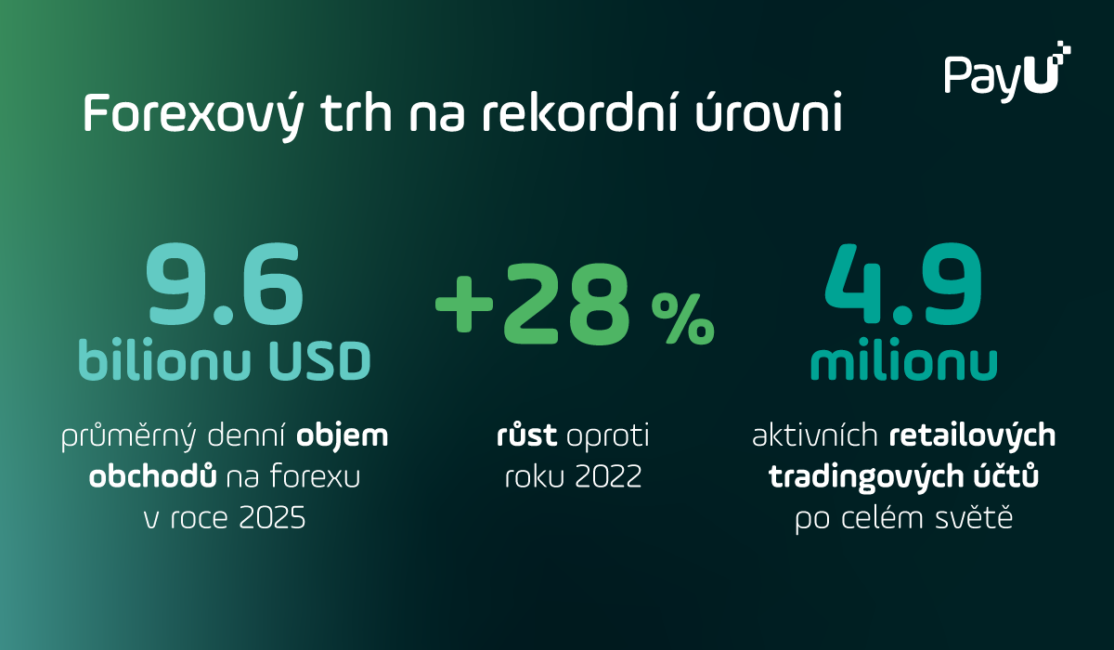
According to the Bank for International Settlements, average daily turnover in FX markets reached approximately USD 9.6 trillion in April 2025, up 28% compared to 2022. While the retail segment is smaller than institutional trading, it is highly dynamic: Finance Magnates estimates around 4.9 million active retail accounts, with monthly volumes approaching USD 20 trillion in 2024.
At the same time, the market for online trading platforms continues to grow. The Mordor Intelligence show that the global online trading platform market was valued at around USD 11.65 billion in 2025, is expected to reach USD 12.55 billion in 2026, and grow to approximately USD 18.2 billion by 2031, with an average annual growth rate of about 7.7%. Competition is intensifying, and differentiation is increasingly less about features and more about how smoothly the surrounding services work. Payments are one of the first things clients experience firsthand.
Digital payment behavior is evolving rapidly. According to Juniper Research, more than 5.2 billion people, over 60% of the global population will be using digital wallets by 2026. Mastercard estimates that transaction volumes via digital wallets will grow from roughly USD 7.5 trillion in 2022 to over USD 12 trillion by 2026.
This trend is also confirmed by research conducted by Perfect Crowd for PayU*, showing that more than two thirds (66%) of people who shop online have hands-on experience with digital wallets, while 31% consider them the most convenient payment method.
Clients of trading platforms are already accustomed to this reality. They expect deposits and withdrawals to work with the same speed, transparency, and modern user experience they know from e-commerce or everyday fintech apps.
At first glance, funding a trading account may resemble an e-commerce checkout: choose an amount, select a payment method, confirm. The difference lies in what this step represents. In e-commerce, payment marks the end of the journey. In trading, it marks the beginning of the relationship.
The decision to start trading is often triggered by a specific impulse, a market movement, breaking news, or a recommendation. If a client can complete registration, verification, and fund their account in a single session, the likelihood of placing the first trade increases significantly.
Every additional step that stretches the process into hours or days weakens that momentum. The speed of the funding process directly affects money conversion and long-term client activity.
In forex, working with multiple currencies is the norm. Clients may deposit funds in one currency, hold their account in another, and trade pairs involving a third or fourth currency. If it is not clear where conversions occur and which fees apply, clients quickly feel that “money is disappearing somewhere.”
A payment solution therefore needs to:
Most trading platforms think globally. Payment habits, however, vary dramatically by region. In some markets, cards dominate; in others, instant bank transfers, open-banking A2A payments, digital wallets, or local schemes are the norm.
A “one-size-fits-all” global checkout often means that part of the client base cannot pay using what they consider a standard method.
If payments are meant to support growth rather than slow it down, brokers need to look deeper when choosing a partner. Key questions include, for example:
Even relatively small improvements in the payment funnel can have a visible impact on acquisition, retention, and P&L at the volumes generated by trading platforms.
PayU has long focused on digital businesses in regions with dynamic and often fragmented payment landscapes including Central and Eastern Europe, Latin America, Africa, and other emerging markets. These are also regions where demand for online investment and trading solutions is growing rapidly.
For forex and CFD platforms, this means a combination of global reach and local market expertise. Through a single integration, brokers can access cards, local bank transfers, digital wallets, and other relevant payment methods, while maintaining a unified technical interface.
A client in Poland will see different payment options than a client in Brazil or Romania without the broker having to manage a complex web of local integrations.
PayU’s infrastructure is also designed to handle high volumes and short-term spikes typical for trading, such as during macroeconomic data releases or central bank decisions. Experience from e-commerce, marketplaces, and other digital verticals naturally transfers into the forex environment.
Security and compliance are another critical element. Forex and CFD products are among the most heavily regulated online offerings, and a payment partner must be able to support regulatory requirements without harming the user experience. PayU builds on standards such as PCI DSS, as well as its own risk and compliance processes developed in demanding regulatory environments.
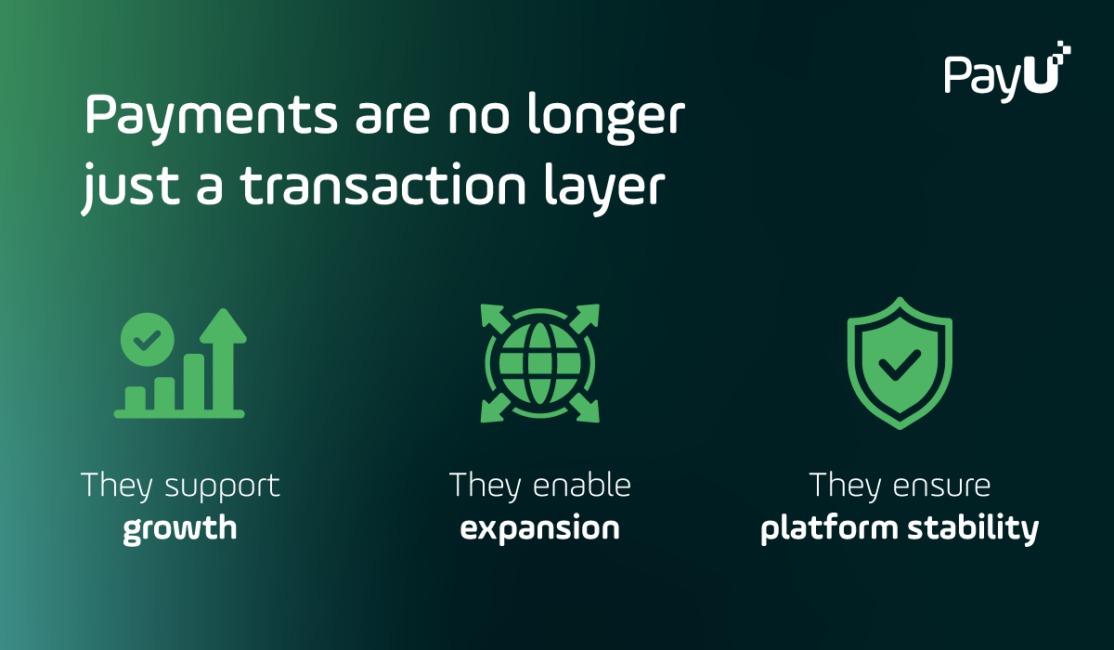
From the client’s perspective, the ideal scenario is simple: funds reach the account quickly and without friction and withdrawals arrive on time and in the expected amount. From the platform’s perspective, the ideal payment layer does not slow down acquisition, complicate expansion, or overload customer support with unnecessary queries.
In 2026, payments are becoming one of the areas where online trading platforms can genuinely gain a competitive edge. The market will continue to grow, features will increasingly standardize, and success will often be determined by the quality of the infrastructure surrounding the trading itself.
A strong payment partner like PayU is therefore not just a transaction processor, but a part of the trust infrastructure between broker and client. The relationship that begins with the first deposit and ends with the final withdrawal is, ultimately, just as important as all the charts and strategies in between.
* Survey “Online salaries in Czechia 2025” for PayU GPO Czechia by Perfect Crowd from March 2025 on a representative sample of 1,005 respondents.